
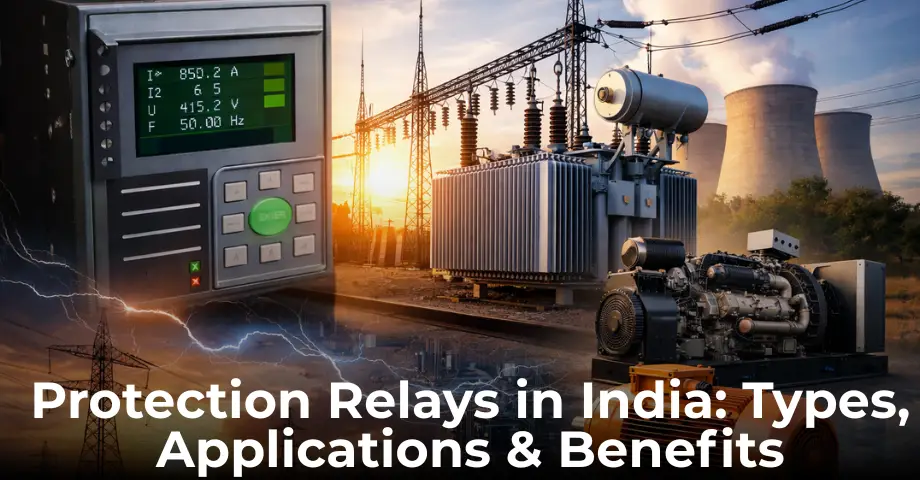
Electricity keeps India moving. From factories and power plants to hospitals, metro rail, and offices, almost everything depends on electrical systems working smoothly. But electrical systems are not perfect. Problems like overloads, short circuits, voltage fluctuations, and equipment failures can happen at any time. When such problems occur, they can damage costly equipment, stop operations, and even cause safety hazards. This is where protection relays become extremely important.
In this article, we will explain protection relays in India in the simplest possible way—what they are, why they matter, where they are used, and how to choose the right one. Whether you are an engineer, a plant manager, a procurement professional, or just someone trying to understand electrical protection, this guide is written for you.
What Are Protection Relays?
A protection relay is a device used in electrical systems to detect abnormal conditions and protect equipment from damage.
To understand this easily, imagine a protection relay as a watchman or safety alarm for electrical equipment.
When everything is normal, the relay quietly monitors the system. But when something goes wrong—such as excessive current, a fault, or unstable voltage—the relay quickly senses the problem and sends a signal to disconnect the affected part of the system. This fast action prevents damage from spreading.
In simple words, protection relays:
- Monitor electrical conditions
- Detect faults or abnormal situations
- Take quick action to protect equipment
Without protection relays, even a small fault could damage transformers, motors, or generators worth lakhs or crores of rupees.
Why Protection Relays Are Essential in Indian Power Systems
India’s power systems operate under challenging conditions. Rapid industrial growth, expanding infrastructure, and increasing electricity demand put pressure on electrical networks.
Here’s why protection relays are especially important in India:
1. Power Fluctuations and Overloading
In many regions, voltage variations and overloading are common due to high demand. Protection relays help prevent damage during these conditions.
2. Costly Electrical Equipment
Equipment like transformers, generators, and motors are expensive and critical for operations. Protection relays act as the first line of defence.
3. Safety of People and Property
Electrical faults can cause fires, explosions, or accidents. Protection relays reduce these risks by quickly isolating faulty sections.
4. Avoiding Long Downtime
Industrial shutdowns lead to production loss and financial damage. Protection relays limit the fault impact and keep the rest of the system running.
This is why industrial protection relays are a standard requirement in Indian power plants, substations, factories, and large commercial facilities.
How Protection Relays Work (Simple Explanation)
You don’t need to be a technical expert to understand how protection relays work.
Here’s a simple explanation:
- The relay continuously checks electrical values like current and voltage
- These values are compared with safe limits
- If values cross the safe range, the relay detects a fault
- The relay sends a signal to disconnect the faulty part
- Equipment remains safe, and damage is avoided
This entire process happens very fast—often in milliseconds.
Types of Protection Relays Used in India
Different electrical problems need different types of protection relays. Below are the most commonly used types in Indian power systems.
Overcurrent Protection Relays
These relays operate when current becomes higher than normal. They are widely used for protecting feeders, cables, and electrical lines.
Earth Fault Protection Relays
Earth faults occur when current flows to the ground due to insulation failure. These relays help detect such issues early and prevent serious damage.
Differential Protection Relays
These relays are mainly used for critical equipment like transformers and generators. They compare input and output values to identify internal faults.
Voltage and Frequency Protection Relays
These relays protect systems from abnormal voltage levels and frequency changes, which are common during unstable power supply.
Together, these electrical protection relays ensure complete protection of power systems.
Numerical and Digital Protection Relays: Why Industries Prefer Them
Earlier, protection relays were mechanical and had limited capabilities. Today, most Indian industries use numerical or digital protection relays.
These modern relays offer many advantages:
- Faster fault detection
- Higher accuracy
- Multiple protection functions in one device
- Better reliability
- Easy monitoring and settings
- Compatibility with automation and control systems
Because of these benefits, numerical protection relays are now the preferred choice for modern power systems.
Industries looking for reliable performance often adopt industrial protection relay solutions that are designed to handle Indian operating conditions and long-term usage.
Applications of Protection Relays in Indian Industries
Protection relays are used across almost all major industrial sectors in India.
Transformer Protection
Transformers are among the most expensive and critical electrical assets. Protection relays help detect overloads, internal faults, and abnormal conditions early, preventing major failures.
Feeder Protection in Substations
Feeders distribute power to different areas. Feeder protection relays isolate faulty sections quickly, preventing large-scale power outages.
Generator and DG Set Protection
Generators and DG sets need protection against overload, imbalance, and abnormal operating conditions—especially in captive power plants and backup systems.
Motor Protection
Motors are widely used in cement plants, steel plants, manufacturing units, and refineries. Protection relays prevent motor damage due to overheating, overload, or electrical faults.
Because of these wide-ranging uses, power system protection relays are essential for reliable industrial operations.
Benefits of Using the Right Protection Relay
Using the right protection relay offers long-term benefits beyond basic safety.
1. Extended Equipment Life
Early fault detection reduces wear and tear, increasing equipment lifespan.
2. Reduced Maintenance Costs
Preventing major failures saves repair and replacement costs.
3. Improved System Reliability
Stable and protected systems run smoothly with fewer interruptions.
4. Better Safety
Protection relays help protect people, property, and infrastructure.
5. Lower Downtime
Quick fault isolation means faster recovery and less production loss.
In short, protection relays improve both safety and profitability.
How to Choose the Right Protection Relay for Your System
Choosing a protection relay does not have to be complicated. Focus on practical factors:
- Type of equipment to be protected
- Operating voltage and load conditions
- Criticality of the system
- Environmental and operating conditions
- Future expansion needs
Instead of choosing the cheapest option, it is better to select reliable protection relay solutions that match your application and Indian power conditions.
Many industries prefer protection relay solutions for Indian power systems that balance performance, durability, and ease of operation.
Final Thoughts
Protection relays may seem like small devices, but their role in electrical systems is massive. They protect expensive equipment, improve safety, and keep operations running smoothly.
For Indian industries dealing with demanding power conditions, protection relays are not optional—they are essential.
When businesses understand what protection relays are, how they work, and where they are used, they can make smarter decisions that create safer systems, reduce losses, and improve long-term reliability.
Frequently Asked Questions (FAQ)
1. What is a protection relay, and what does it do?
A protection relay is a device that monitors electrical systems and detects faults such as overloads or short circuits. When a problem occurs, it helps disconnect the faulty part to protect equipment and ensure system safety.
2. Why are protection relays important in India?
Protection relays are important in India because power systems often face voltage fluctuations, heavy loads, and demanding operating conditions. They help prevent equipment damage, improve safety, and reduce downtime in industries.
3. Where are protection relays commonly used?
Protection relays are commonly used in power plants, substations, factories, and industrial facilities. They protect critical equipment like transformers, generators, feeders, and motors.
4. What types of protection relays are used in industrial applications?
Industrial applications use overcurrent relays, earth fault relays, differential relays, and voltage or frequency protection relays. Each type is designed to handle specific electrical fault conditions.
5. What is the difference between numerical and conventional protection relays?
Conventional protection relays are mechanical and limited in function. Numerical protection relays are digital, faster, more accurate, and can perform multiple protection functions in one device.
6. How do I choose the right protection relay for my system?
To choose the right protection relay, consider the type of equipment, operating conditions, safety requirements, and future expansion needs. Selecting a reliable solution suited for Indian power systems is recommended.