
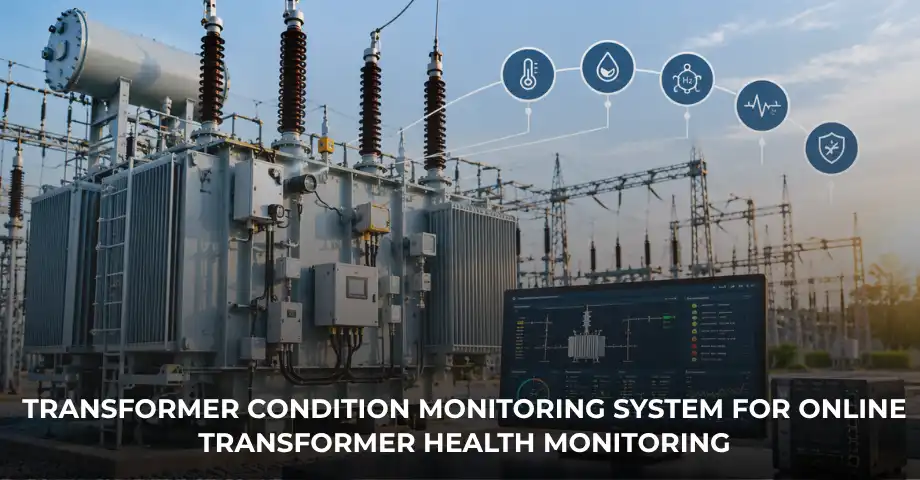
Power transformers are among the most valuable and critical assets in any electrical power system. Whether installed in industrial plants, power generation facilities, transmission networks, or distribution substations, transformers operate continuously under varying electrical and environmental conditions. A single transformer failure can result in prolonged production downtime, costly repairs, equipment replacement, and significant financial losses.
To minimise these risks, industries are increasingly adopting Transformer Condition Monitoring systems that continuously assess the health of transformers and provide early warning of developing faults. Instead of relying solely on periodic inspections, modern monitoring solutions collect real-time operational data, enabling maintenance teams to identify abnormalities before they become major failures.
Online transformer condition monitoring combines intelligent sensors, data analytics, communication systems, and automation platforms to continuously monitor transformer performance. This allows maintenance engineers to optimise maintenance schedules, improve asset reliability, extend transformer life, and reduce unexpected outages.
In this guide, you’ll learn what transformer condition monitoring is, why it is important, the different monitoring techniques available, and how online monitoring systems help industries protect their critical electrical assets.
What Is Transformer Condition Monitoring?
Transformer Condition Monitoring is the process of continuously or periodically assessing the operating condition and health of a power transformer by measuring critical electrical, thermal, and mechanical parameters.
The primary objective is to detect early signs of deterioration so that maintenance can be planned before a fault develops into a major failure. Rather than waiting for a transformer to fail, condition monitoring enables a predictive maintenance approach based on the actual health of the equipment.
Modern transformer monitoring systems continuously analyse operating data such as:
- Oil temperature
- Winding temperature
- Load current
- Moisture in insulation
- Dissolved gas concentration
- Partial discharge activity
- Bushing condition
- Oil level
- Cooling system performance
Quick Definition
Transformer Condition Monitoring is the continuous or periodic assessment of transformer health using sensors, diagnostic techniques, and monitoring systems to detect developing faults before they lead to equipment failure.
Condition monitoring works alongside protection systems to improve transformer reliability. If you’re new to transformer protection, read our guide on Transformer Protection System to understand how monitoring and protection complement each other.
Why Transformer Condition Monitoring Is Important
Transformers are expected to operate reliably for decades, but factors such as overloading, insulation ageing, moisture ingress, thermal stress, electrical faults, and environmental conditions gradually affect their performance.
Without continuous monitoring, these problems often remain unnoticed until a serious fault occurs.
Transformer condition monitoring helps industries:
- Detect faults at an early stage.
- Reduce unplanned outages.
- Improve equipment reliability.
- Extend transformer service life.
- Reduce maintenance costs.
- Improve operational safety.
- Optimise maintenance planning.
- Protect high-value electrical assets.
Instead of performing maintenance at fixed intervals, engineers can schedule maintenance activities based on the actual condition of the transformer, reducing unnecessary inspections while improving system reliability.
Offline vs Online Transformer Condition Monitoring
Transformer condition assessment can be performed using either offline testing or continuous online monitoring. Both methods play an important role in transformer maintenance, but they differ significantly in terms of data availability and response time.
Offline Monitoring
Offline monitoring involves testing the transformer during scheduled shutdowns. Engineers perform diagnostic tests manually using specialised instruments to evaluate the condition of insulation, oil, windings, and other components.
Common offline tests include:
- Insulation Resistance Test
- Transformer Turns Ratio (TTR) Test
- Winding Resistance Measurement
- Oil Breakdown Voltage Test
- Dissolved Gas Analysis (Laboratory)
Although offline testing provides valuable diagnostic information, it cannot detect faults that develop between maintenance intervals.
Online Monitoring
Online monitoring continuously measures transformer operating parameters while the transformer remains in service. Intelligent sensors collect real-time data and transmit it to monitoring software, enabling maintenance teams to detect abnormal operating conditions immediately.
Modern online systems support predictive maintenance by providing continuous visibility into transformer health without interrupting plant operations.
Key Parameters Monitored in Transformer Condition Monitoring
An effective monitoring system continuously measures several critical parameters that directly influence transformer performance and reliability.
Oil Temperature
Transformer oil performs two essential functions: insulation and cooling. Excessive oil temperature accelerates insulation ageing and reduces transformer life. Continuous temperature monitoring helps detect cooling system failures, overloading, and abnormal operating conditions.
Winding Temperature
The winding is one of the most critical components of a transformer. High winding temperatures increase insulation deterioration and can eventually lead to winding failure. Fibre optic sensors or thermal models are commonly used for continuous winding temperature monitoring.
Dissolved Gas Analysis (DGA)
Dissolved Gas Analysis is one of the most effective transformer diagnostic techniques. Faults inside the transformer generate gases such as hydrogen, methane, ethylene, acetylene, and carbon monoxide. By monitoring these gases, engineers can identify overheating, insulation degradation, arcing, and partial discharge long before a major failure occurs.
Moisture in Oil
Moisture significantly reduces the dielectric strength of transformer insulation. Online moisture sensors continuously monitor water content in transformer oil, helping maintenance teams prevent insulation failure.
Load Current
Continuous monitoring of transformer load helps operators detect overload conditions and optimise transformer utilisation while preventing excessive thermal stress.
Oil Level
Low transformer oil level may indicate leakage or internal problems. Continuous oil level monitoring helps ensure adequate insulation and cooling performance.
Bushing Condition
Bushings are exposed to electrical, thermal, and environmental stress throughout their service life. Monitoring capacitance, leakage current, and insulation condition helps identify deterioration before failure occurs.
Partial Discharge Activity
Partial discharge is often one of the earliest indicators of insulation failure. Online partial discharge monitoring detects insulation defects before they develop into serious electrical faults.
Main Components of an Online Transformer Monitoring System
A modern transformer condition monitoring solution integrates multiple intelligent devices to continuously assess transformer health.
Smart Sensors
Sensors measure temperature, moisture, dissolved gases, oil level, pressure, vibration, and other operating parameters.
Monitoring Controller
The controller collects sensor data, performs diagnostic calculations, and communicates with higher-level monitoring systems.
Communication Network
Industrial communication protocols such as Modbus, IEC 61850, and Ethernet enable reliable data transmission between monitoring devices and control systems.
Monitoring Software
The software displays real-time transformer health, alarms, historical trends, and maintenance reports through an intuitive user interface.
Cloud or Local Database
Collected operational data is securely stored for historical analysis, fault investigation, and predictive maintenance planning.
Types of Transformer Condition Monitoring Techniques
Several diagnostic techniques are used to evaluate transformer condition. The appropriate method depends on transformer size, operating conditions, maintenance strategy, and criticality.
Dissolved Gas Analysis (DGA)
Monitors gases dissolved in transformer oil to identify internal electrical and thermal faults.
Thermal Monitoring
Continuously measures oil and winding temperatures to detect overheating and cooling system issues.
Moisture Monitoring
Tracks water content in transformer oil and insulation to prevent dielectric failure.
Partial Discharge Monitoring
Detects insulation deterioration by monitoring high-frequency electrical discharge activity.
Bushing Monitoring
Measures insulation health, leakage current, and capacitance to identify ageing bushings.
Load Monitoring
Evaluates transformer loading trends to optimise operation and prevent overload conditions.
Combining multiple monitoring techniques provides a comprehensive picture of transformer health, enabling maintenance teams to make informed decisions based on actual operating conditions rather than fixed maintenance schedules.
Modern monitoring systems are increasingly integrated with intelligent substation automation platforms for centralised monitoring and remote diagnostics. This integration will be explored in the next section.
Online Transformer Monitoring Systems
Traditional transformer maintenance relied on scheduled inspections and periodic testing. While these methods remain valuable, they may not detect faults that develop between maintenance intervals. An Online Transformer Monitoring System continuously monitors transformer health while the equipment remains energised, allowing maintenance teams to identify abnormal operating conditions in real time.
These systems collect data from multiple sensors installed on the transformer and analyse the information using intelligent diagnostic software. Whenever a parameter exceeds its predefined threshold, the system immediately generates an alarm, allowing corrective action before the fault develops into a major failure.
Most online monitoring systems measure:
- Oil and winding temperature
- Dissolved gas concentration (DGA)
- Moisture in transformer oil
- Oil level and pressure
- Bushing insulation condition
- Partial discharge activity
- Load current and voltage
- Cooling system performance
Modern monitoring platforms also support remote access, trend analysis, event recording, and predictive diagnostics, making them an essential part of asset health management strategies.
Benefits of Transformer Condition Monitoring
Continuous condition monitoring provides valuable insights into transformer performance and enables maintenance teams to make informed decisions based on real operating conditions.
Early Fault Detection
Condition monitoring identifies insulation deterioration, overheating, moisture ingress, partial discharge, and gas generation before these issues develop into catastrophic failures.
Improved Asset Reliability
Continuous monitoring reduces unexpected transformer failures, ensuring a more reliable electrical supply for industrial operations and utility networks.
Reduced Maintenance Costs
Predictive maintenance eliminates unnecessary inspections and focuses maintenance activities on equipment that genuinely requires attention, reducing maintenance costs and improving resource utilisation.
Longer Transformer Life
Monitoring critical operating parameters helps operators avoid excessive thermal and electrical stress, extending the service life of transformer insulation and other key components.
Lower Downtime
Early detection allows maintenance to be planned during scheduled shutdowns rather than after unexpected failures, reducing production interruptions.
Improved Operational Safety
Detecting faults before they become dangerous helps minimise the risk of transformer explosions, fires, and electrical accidents.
Better Maintenance Planning
Historical operating data supports predictive maintenance programmes, allowing engineers to prioritise maintenance based on actual transformer condition instead of fixed maintenance intervals.
Industrial Applications of Transformer Condition Monitoring
Transformer condition monitoring is widely used wherever transformer reliability is essential for uninterrupted operations.
Power Generation Plants
Thermal, hydroelectric, and renewable power plants rely on online monitoring to protect generator transformers and auxiliary transformers from unexpected failures.
Transmission & Distribution Utilities
Electric utilities monitor critical transmission and distribution transformers to improve grid reliability and minimise service interruptions.
Steel Plants
Steel manufacturing facilities operate high-capacity transformers under heavy electrical loads. Continuous monitoring helps maintain reliable power for furnaces, rolling mills, and production lines.
Cement Plants
Cement plants use large transformers to supply crushers, kilns, and grinding mills. Online monitoring reduces downtime and improves maintenance planning.
Manufacturing Industries
Industrial plants depend on reliable transformer operation to support automated production systems, CNC machines, and motor control centres.
Oil & Gas Facilities
Transformer monitoring improves the reliability of electrical infrastructure used in refineries, offshore platforms, and pipeline operations.
Renewable Energy Projects
Solar and wind power installations use transformer monitoring systems to ensure reliable grid connection and maximise energy availability.
Transformer Condition Monitoring vs Periodic Maintenance
| Feature | Condition Monitoring | Periodic Maintenance |
|---|---|---|
| Monitoring Method | Continuous | Scheduled inspections |
| Fault Detection | Real-time | Only during maintenance |
| Maintenance Strategy | Predictive | Time-based |
| Equipment Downtime | Minimal | Higher |
| Operational Reliability | Excellent | Moderate |
| Asset Life Optimisation | High | Limited |
Most modern utilities and industrial facilities now combine both approaches, using continuous monitoring alongside scheduled inspections to achieve maximum reliability.
Integration with SCADA and Protection Systems
Modern transformer monitoring systems are commonly integrated with SCADA, protection relays, and substation automation platforms. This integration enables operators to monitor transformer health, electrical parameters, alarms, and protection events from a central control room.
By combining condition monitoring with intelligent protection devices, maintenance teams gain complete visibility into transformer performance and can respond more quickly to developing faults.
For a deeper understanding of automation systems, read our guide on SCADA for Electrical Substations.
Monitoring systems also work alongside protection relays such as transformer differential protection, overcurrent protection, and feeder protection to improve equipment safety and operational reliability.
Choosing the Right Transformer Monitoring System
The ideal monitoring solution depends on the transformer’s rating, application, operating environment, and maintenance objectives.
When selecting a monitoring system, consider:
- Transformer capacity and voltage level
- Criticality of the application
- Parameters to be monitored
- Communication protocol compatibility
- SCADA integration requirements
- Remote monitoring capability
- Future expansion requirements
- Manufacturer support and service availability
A comprehensive asset health assessment helps determine the most suitable monitoring solution for each installation.
Maintenance Best Practices
Although online monitoring systems reduce manual inspections, regular maintenance remains essential for ensuring accurate measurements and dependable operation.
Recommended maintenance activities include:
- Inspect sensors and wiring connections.
- Verify calibration of monitoring devices.
- Review alarm settings and event logs.
- Update monitoring software where applicable.
- Test communication with SCADA systems.
- Inspect transformer cooling equipment.
- Perform periodic oil testing for verification.
- Maintain historical maintenance records.
Combining preventive maintenance with continuous condition monitoring delivers the highest level of transformer reliability.
Why Choose Delta Technocrats?
Delta Technocrats provides advanced Online Asset Health Monitoring solutions designed to improve transformer reliability, reduce maintenance costs, and enhance the performance of industrial electrical systems.
Our capabilities include:
- Online Transformer Condition Monitoring
- Dissolved Gas Analysis (DGA) Monitoring
- Substation Automation & SCADA Integration
- Transformer Protection Systems
- Numerical Protection Relays
- Power Quality Solutions
- Protection Testing & Commissioning
- Electrical EPC Services
From engineering and installation to commissioning and after-sales support, our experienced team delivers customised monitoring solutions for utilities, industrial plants, and infrastructure projects across Eastern India.
Frequently Asked Questions (FAQs)
1. What is transformer condition monitoring?
Transformer condition monitoring is the continuous or periodic assessment of transformer health using diagnostic techniques and intelligent monitoring systems to detect faults before failure occurs.
2. Why is transformer condition monitoring important?
It helps identify developing faults early, reduces unplanned outages, extends transformer life, improves safety, and supports predictive maintenance.
3. What is Dissolved Gas Analysis (DGA)?
DGA measures gases dissolved in transformer oil to identify insulation deterioration, overheating, arcing, and other internal transformer faults.
4. What is the difference between online and offline monitoring?
Online monitoring continuously measures transformer health while the transformer is operating, whereas offline monitoring requires scheduled shutdowns for testing.
5. Can transformer monitoring systems integrate with SCADA?
Yes. Modern monitoring systems are designed to integrate with SCADA, substation automation platforms, and numerical protection relays for centralised monitoring and control.
6. Which industries use transformer condition monitoring?
Power utilities, manufacturing plants, steel industries, cement plants, renewable energy projects, mining operations, and oil & gas facilities commonly use transformer monitoring systems.
7. Does condition monitoring replace transformer protection relays?
No. Condition monitoring identifies developing faults, while protection relays isolate the transformer during fault conditions. Both systems work together to improve transformer reliability.
8. How often should transformer monitoring systems be maintained?
Monitoring systems should be inspected regularly according to the manufacturer’s recommendations, with periodic calibration, communication testing, and sensor verification.
Conclusion
Transformer Condition Monitoring has become an essential part of modern asset management strategies for utilities and industrial facilities. By continuously monitoring transformer health, maintenance teams can detect developing faults early, reduce unexpected failures, optimise maintenance schedules, and extend the service life of critical electrical assets.
When combined with online monitoring systems, intelligent protection relays, and SCADA-based substation automation, transformer condition monitoring provides complete visibility into transformer performance while supporting safer and more reliable electrical operations.
As industries continue moving toward predictive maintenance and digital asset management, investing in advanced transformer monitoring solutions helps improve operational reliability, minimise downtime, and maximise the return on high-value electrical assets.
To learn more about transformer protection, automation, and power quality, you may also find these guides useful:
- Transformer Protection System
- Transformer Protection Relays for Industries
- SCADA for Electrical Substations
- Differential Protection Relay
- Numerical vs Conventional Protection Relays
- Current Transformer Accuracy Class
- Power Factor Correction
- Active Harmonic Filter
Protect Your Critical Transformer Assets with Delta Technocrats
Delta Technocrats offers advanced Online Transformer Condition Monitoring, Asset Health Monitoring, SCADA integration, transformer protection systems, and power quality solutions for industrial and utility applications. Contact our experts to implement intelligent monitoring solutions that improve transformer reliability, minimise downtime, and support predictive maintenance.