
A generator is the heart of any power system. When it stops, everything connected to it stops. In steel plants, mining operations, manufacturing units, and power stations across West Bengal, Jharkhand, Odisha, and the North-East, generators carry a massive responsibility.
But here’s the reality — generators operate under constant electrical and mechanical stress. Voltage fluctuations, overloads, insulation failure, or internal faults can cause serious damage if not detected early.
That is exactly why generator protection relays are essential. To understand the broader role of protection systems, you can also explore protection relays in India.
In this guide, you will understand what generator protection relays are, how they work, the types used in industrial and power plant applications, and how to choose the right system for reliable long-term performance.
What Are Generator Protection Relays?
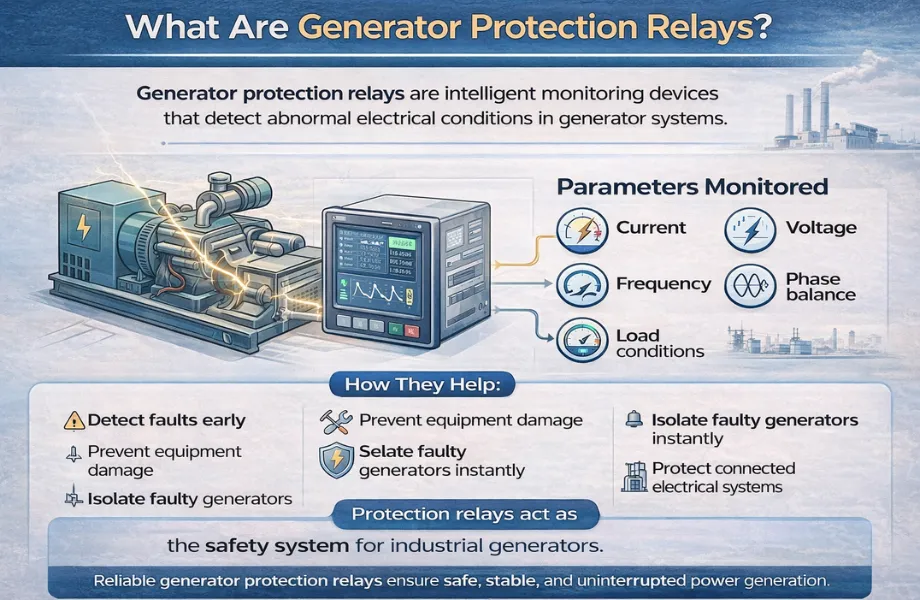
Generator protection relays are devices designed to monitor generator performance and detect abnormal electrical conditions before damage occurs.
They continuously observe parameters such as current, voltage, frequency, and phase balance. If something unusual happens — such as overload, short circuit, or internal fault — the relay quickly sends a signal to isolate the generator from the system.
Instead of allowing damage to spread, generator protection relays stop the problem at its source.
Without proper protection, generator faults can lead to:
- Expensive repairs
- Long shutdown periods
- Equipment damage
- Safety risks
That is why generator protection relays are widely used in captive power plants, thermal stations, and industrial backup systems.
Why Generator Protection Is Important in Eastern India
Eastern India has a strong industrial and energy base.
Heavy Industrial Operations
Steel and mining industries in Jharkhand and Odisha rely on captive power generation. Generator failure in these environments can halt entire operations.
Power Plants and Grid Support
West Bengal and Odisha operate multiple thermal and hydro projects. Stable generator performance is critical for grid reliability.
Remote and Expanding Regions
In parts of the North-East, generators provide backup and support to developing infrastructure. Reliable protection ensures uninterrupted supply.
Because of these conditions, generator protection relays play a crucial role in maintaining stable power systems.
How Generator Protection Relays Work
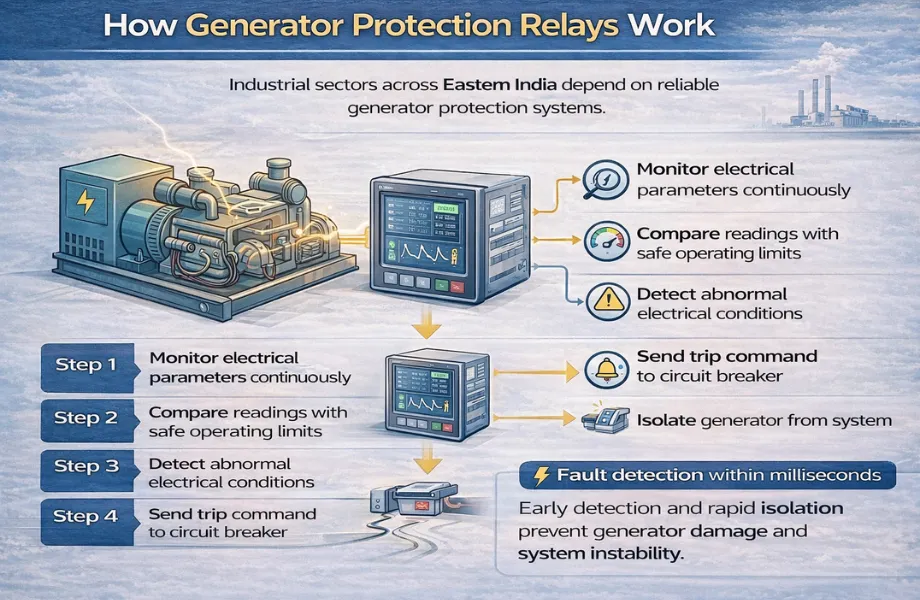
The working principle is straightforward.
Generator protection relays:
- Monitor electrical parameters continuously
- Compare readings with predefined safe limits
- Detect abnormal conditions
- Send a trip command when required
The response time is extremely fast — usually within milliseconds.
The objective is simple: detect early, isolate quickly, and protect both the generator and connected equipment.
Common Generator Faults
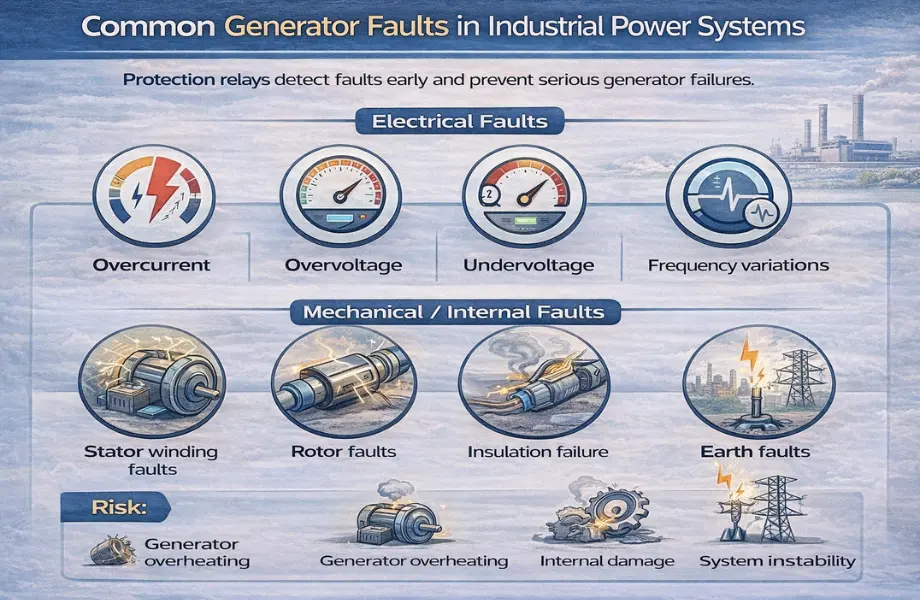
Generators face several types of electrical and operational risks.
Overcurrent due to excessive load
Overvoltage or undervoltage conditions
Frequency variations
Phase imbalance
Stator or rotor winding faults
Earth faults
In heavy industrial environments, sudden load changes can stress generator systems. Generator protection relays are designed to detect these faults before serious damage occurs.
Types of Generator Protection Relays
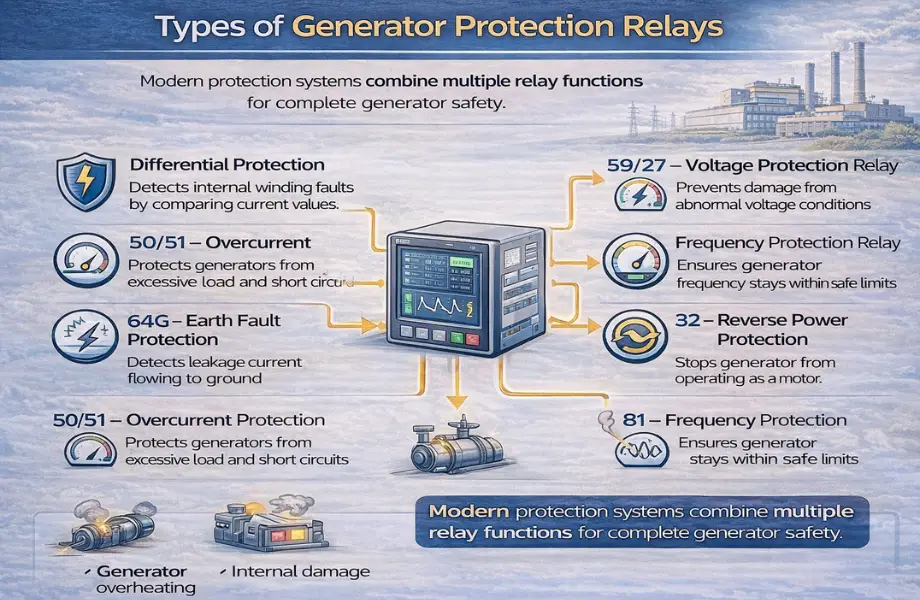
Different generators require different protection strategies. Below are the most commonly used types.
Overcurrent Protection
Protects the generator from excessive load and short circuit conditions.
Earth Fault Protection
Detects leakage current to the ground and prevents insulation damage.
Differential Protection
Compares input and output currents to detect internal winding faults.
Voltage Protection Relay
Protects against abnormal voltage levels that may damage connected equipment.
Frequency Protection Relay
Ensures generator frequency remains within safe operating limits.
Reverse Power Protection
Prevents the generator from operating as a motor due to system imbalance.
Modern generator protection relays often combine multiple functions within a single numerical unit.
These advanced systems are part of modern numerical protection relays, which offer improved accuracy and digital monitoring capabilities.
Numerical Generator Protection Relays
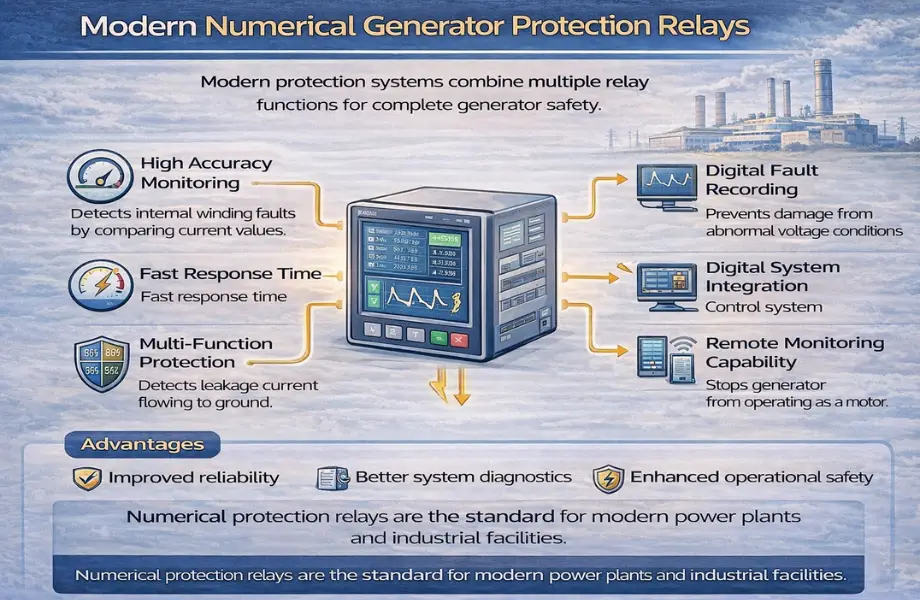
Most modern power plants and industrial facilities now prefer numerical generator protection relays.
These systems provide:
- High accuracy
- Fast response time
- Multiple protection functions
- Digital monitoring and data recording
- Easy integration with control systems
Numerical solutions offer better reliability compared to older electromechanical systems.
Industries in Eastern India increasingly rely on advanced generator protection relays to improve safety and operational efficiency.
Companies like Delta Technocrats support industrial clients in the region by providing reliable generator protection systems designed for demanding operating environments.
Applications Across Industries
Generator protection relays are widely used in:
Thermal and captive power plants
Steel and mining operations
Manufacturing industries
Infrastructure and commercial facilities
Backup generator systems
Across West Bengal, Jharkhand, Odisha, and the North-East, these protection systems help maintain stable power generation and prevent costly failures.
Benefits of Reliable Generator Protection Relays
Installing dependable generator protection relays offers clear advantages.
They prevent major equipment damage.
They reduce downtime by isolating faults quickly.
They extend generator life by protecting internal components.
They improve safety and reduce operational risks.
They ensure consistent and stable power output.
For voltage-sensitive equipment, constant voltage transformer solutions are also used to maintain a stable output. Industries dependent on continuous power, these benefits directly support business continuity.
Choosing the Right Generator Protection Relay
Selecting the right system requires careful consideration.
Evaluate:
- Generator capacity
- Operating voltage
- Load characteristics
- Environmental conditions
- Criticality of power supply
- Future expansion plans
Proper coordination with transformer protection relays and feeder protection relays is also important for complete system safety.
Choosing a reliable industrial protection solution ensures long-term generator stability and performance.
Final Thoughts
Generators are central to industrial productivity and grid stability. When a generator fails, the impact can be immediate and costly.
Generator protection relays detect faults early, isolate issues quickly, and protect both equipment and operations.
In the expanding industrial environment of Eastern India, investing in reliable protective relays is not just about technical compliance — it is about safeguarding assets, ensuring safety, and maintaining uninterrupted power generation.
Frequently Asked Questions (FAQs)
What is a generator protection relay?
A generator protection relay is a device used to monitor electrical parameters such as voltage, current, and frequency in a generator. It detects abnormal conditions and isolates faults to protect the generator from damage.
Why is generator protection important in power plants?
Generator protection is important because generators are critical and expensive equipment in power plants. Proper protection helps prevent severe damage, reduces downtime, and ensures safe and reliable power generation.
What are the types of generator protection relays?
Common types of generator protection relays include differential protection, stator earth fault protection, rotor earth fault relay, reverse power relay, loss of excitation relay, and overcurrent protection.
How does a generator protection relay work?
A generator protection relay works by continuously monitoring electrical parameters, comparing them with preset limits, detecting abnormalities, and sending a trip signal to disconnect the generator during fault conditions.
What faults are detected in a generator?
Generator protection relays detect various faults such as stator faults, rotor earth faults, reverse power conditions, loss of excitation, and negative sequence currents that can cause overheating.
What is reverse power protection in generators?
Reverse power protection prevents damage when power flows from the grid back into the generator, usually due to turbine failure. It ensures the generator does not operate as a motor.
What is loss of excitation in a generator?
Loss of excitation occurs when the generator’s field current is lost, causing instability and potential damage. Protection relays detect this condition and isolate the generator quickly.
What is differential protection of a generator?
Differential protection compares current entering and leaving the generator. If there is a difference, it indicates an internal fault, and the relay trips the system to prevent damage.
What is the function of protection relays in power systems?
Protection relays are used to detect faults in electrical systems and isolate faulty sections to maintain system stability and protect equipment.
Which relay is used for generator protection?
Multiple relays are used together for generator protection, including differential relays, reverse power relays, loss of excitation relays, and overcurrent relays.