
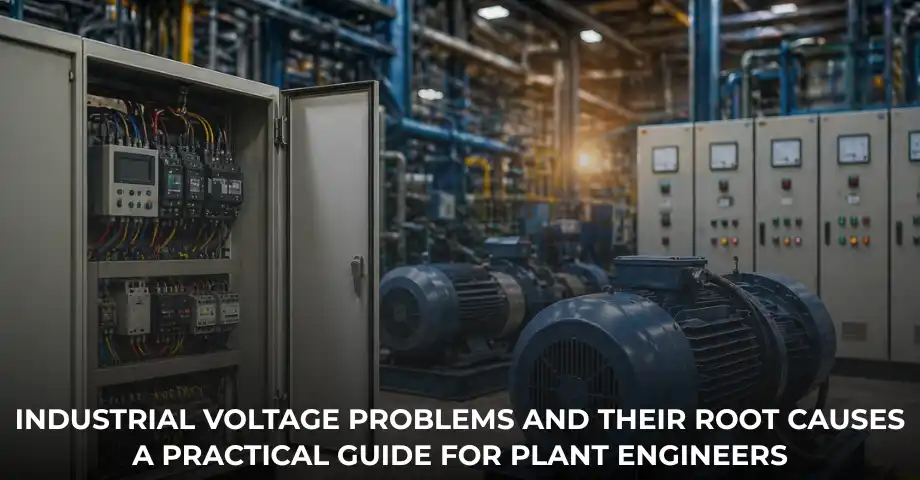
In many industrial facilities, voltage fluctuation is not taken seriously until it begins to disrupt operations. A machine trips without warning, motors start overheating, or sensitive control systems behave unpredictably. What initially appears to be a minor electrical issue often turns into repeated production downtime, rising maintenance costs, and premature equipment failure.
For plant engineers, the real challenge is not just dealing with voltage fluctuation, but identifying its exact cause. Without understanding whether the issue originates from the external power supply or within the factory’s own electrical system, implementing the right solution becomes difficult.
This guide provides a practical, engineering-focused breakdown of the root causes of voltage fluctuation in industrial environments, helping you diagnose the problem more effectively and take informed corrective action. For a broader overview of industrial voltage fluctuation solutions, you can also explore Delta Technocrats.
What is Voltage Fluctuation in Industrial Systems?
Voltage fluctuation in industrial settings refers to the continuous variation in voltage levels beyond acceptable limits required for stable equipment operation. Unlike minor variations seen in residential setups, industrial voltage instability can significantly impact heavy machinery, automated systems, and production processes.
In a factory environment, even small voltage deviations can lead to performance inefficiencies, especially in equipment such as CNC machines, compressors, conveyors, and PLC-controlled systems. These fluctuations are often linked to power quality issues, unstable power supply, or internal electrical system imbalances.
External Causes of Voltage Fluctuation in Industry
Not all voltage problems originate within the plant. In many cases, fluctuations are caused by factors outside the control of the facility.
1. Grid Instability
Industrial areas often depend on shared electrical grids. When multiple facilities draw power simultaneously, voltage levels can become unstable. Sudden demand spikes or uneven load distribution across the grid can lead to inconsistent voltage supply.
2. Utility Switching Operations
Power distribution companies frequently perform switching operations to manage load or conduct maintenance. These transitions can cause temporary voltage dips or surges, affecting connected industrial units.
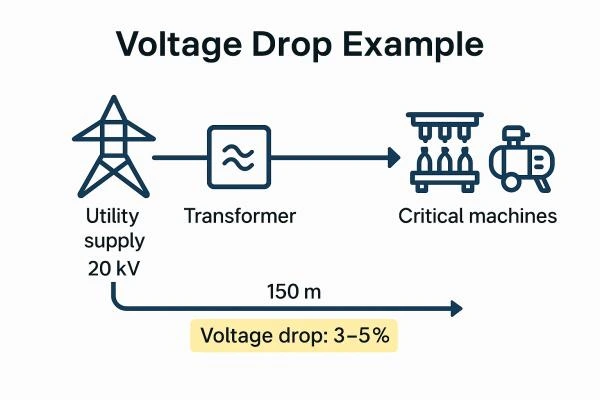
3. Transmission Losses and Long Distribution Lines
Industries located far from substations often experience voltage drops due to transmission losses. The longer the distance, the higher the resistance, leading to reduced voltage at the receiving end.
In such cases, understanding upstream system behavior becomes important. Maintenance practices at substations also play a role, as outlined in this CVT maintenance checklist for substations, which highlights how power conditioning equipment impacts voltage stability.
While these external factors cannot be fully controlled, they can be managed with the right electrical infrastructure within the plant.
Internal Causes of Voltage Fluctuation in Industrial Facilities
In most cases, the root cause of voltage fluctuation lies within the factory itself. Internal electrical behavior, equipment usage patterns, and system design all contribute significantly to voltage instability.
1. Load Variation in Industrial Operations
Industrial environments are highly dynamic. Machines are constantly starting, stopping, and operating at varying loads. This creates continuous changes in power demand, leading to voltage fluctuations.
For example, in a manufacturing plant where multiple machines operate simultaneously, sudden activation of high-load equipment can cause temporary voltage drops across the system.
2. Heavy Motor Starting Current
Large motors draw significantly higher current during startup compared to normal operation. This sudden surge can cause momentary voltage dips, affecting other equipment connected to the same supply line.
Repeated motor startups without proper control mechanisms can lead to persistent voltage instability and increase the risk of motor damage. In such cases, understanding motor protection becomes critical. Learn more about how voltage issues contribute to failures in industrial motor protection systems.
3. Electrical System Imbalance
Uneven distribution of load across phases can create voltage imbalance. This is common in facilities where single-phase and three-phase loads are not properly managed.
Voltage imbalance not only affects equipment performance but also increases energy losses and reduces system efficiency. Protection mechanisms such as transformer protection relays can help detect and mitigate such issues.
4. Poor Wiring and Incorrect Cable Sizing
Undersized cables or poor wiring practices increase resistance in the electrical system. This leads to voltage drops, especially under heavy load conditions.
In older facilities, aging wiring infrastructure can further aggravate the problem, making voltage fluctuation more frequent and severe.
5. Transformer Overloading
When a transformer operates beyond its rated capacity, it struggles to maintain stable voltage output. Overloading can cause voltage dips, overheating, and long-term damage to the transformer itself.
This issue is often overlooked until significant performance problems arise within the plant.
Common Symptoms of Voltage Fluctuation in Industry
Identifying voltage fluctuation early can prevent serious operational issues. Some of the most common symptoms include:
- Frequent machine tripping or unexpected shutdowns
- Flickering of industrial lighting systems
- Overheating of motors and electrical equipment
- Reduced efficiency of machinery
- Irregular performance of PLC and control systems
These symptoms often appear gradually but can escalate quickly if the root cause is not addressed.
Impact of Voltage Fluctuation on Industrial Equipment
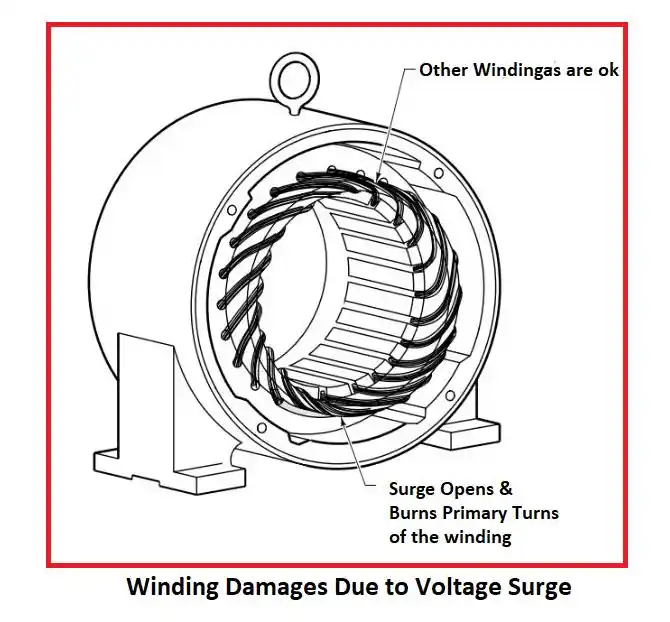
Voltage fluctuation is not just an electrical issue—it directly affects the performance, reliability, and lifespan of critical industrial equipment. If left unaddressed, even minor fluctuations can lead to long-term operational and financial consequences.
1. Damage to Industrial Motors
Motors are highly sensitive to voltage variations. Undervoltage conditions force motors to draw higher current, leading to overheating and insulation damage. On the other hand, overvoltage can stress motor windings and reduce their operational life.
Frequent voltage instability is one of the leading causes of unexpected motor failure in industrial facilities.
2. Malfunction of PLC and Control Systems
Programmable Logic Controllers (PLCs) and automated control systems require stable voltage for accurate operation. Voltage fluctuations can result in incorrect signals, erratic behavior, or complete system shutdowns.
This is particularly critical in automated production lines where even a small disruption can halt the entire process.
3. Reduced Transformer Efficiency and Lifespan
Transformers operating under unstable voltage conditions experience additional thermal stress. Over time, this reduces insulation strength and increases the likelihood of failure.
When combined with overloading, voltage fluctuation can significantly shorten transformer lifespan.
4. Increased Production Downtime
Unstable power supply leads to frequent interruptions in production. Machines may trip, processes may reset, and output consistency is affected.
For industries operating on tight schedules, this directly translates into financial losses and missed delivery commitments.
How to Diagnose the Root Cause of Voltage Fluctuation
Identifying the exact cause of voltage fluctuation requires a systematic approach. Instead of making assumptions, plant engineers should follow a structured diagnostic process.
1. Monitor Voltage Patterns
Observe when fluctuations occur—during peak hours, machine startup, or continuous operation. This helps determine whether the issue is external or internal.
2. Analyze Load Behavior
Check if voltage drops coincide with the operation of heavy equipment such as compressors, motors, or welding machines. This often indicates internal load variation issues.
3. Inspect Distribution System
Evaluate wiring, cable sizing, and load distribution across phases. Any imbalance or inefficiency in the system can lead to voltage instability.
4. Assess Transformer Capacity
Verify whether the transformer is operating within its rated capacity. Overloaded transformers are a common source of voltage fluctuation in factories.
This diagnostic approach helps isolate the problem and ensures that corrective measures are both effective and targeted.
Solution Strategy: How to Control Voltage Fluctuation in Industry
Once the root cause is identified, the next step is selecting the right solution. Different problems require different approaches—there is no one-size-fits-all method.
1. Constant Voltage Transformers (CVT) for Sensitive Equipment
For applications involving sensitive electronics, CNC machines, and control systems, maintaining a stable voltage is critical. Constant Voltage Transformers help regulate output voltage despite input fluctuations.
To understand how these systems work in industrial environments, explore constant voltage transformers for industrial use.
2. Industrial Voltage Stabilizers for Load Variation
When voltage fluctuation is caused by load variation or grid instability, industrial voltage stabilizers provide effective correction. They maintain consistent voltage levels across varying input conditions.
For a complete overview of suitable solutions, refer to industrial voltage fluctuation solutions.
3. Protection Relays for System Safety
Voltage fluctuation often leads to secondary issues such as overload, short circuits, and imbalance. Protection relays help detect abnormal conditions and prevent equipment damage.
Implementing proper relay systems ensures that faults are isolated before they escalate into major failures.
4. System Optimization and Load Management
In many cases, improving internal electrical design can significantly reduce voltage fluctuation. This includes:
- Balancing loads across phases
- Upgrading cable sizing
- Optimizing transformer capacity
- Reducing unnecessary load spikes
Combining system optimization with the right equipment creates a stable and efficient power environment.
Conclusion: Turning Voltage Problems into Controlled Systems
Voltage fluctuation in industrial facilities is not an isolated issue—it is a symptom of deeper electrical challenges. Whether caused by external grid conditions or internal system inefficiencies, ignoring it can lead to serious operational risks.
For plant engineers, the key lies in understanding the root cause, diagnosing it accurately, and implementing the right combination of solutions.
With the right approach and infrastructure, voltage instability can be effectively controlled, improving equipment reliability, reducing downtime, and enhancing overall operational efficiency.
To explore advanced solutions and products designed for industrial voltage control, visit Delta Technocrats product range.