
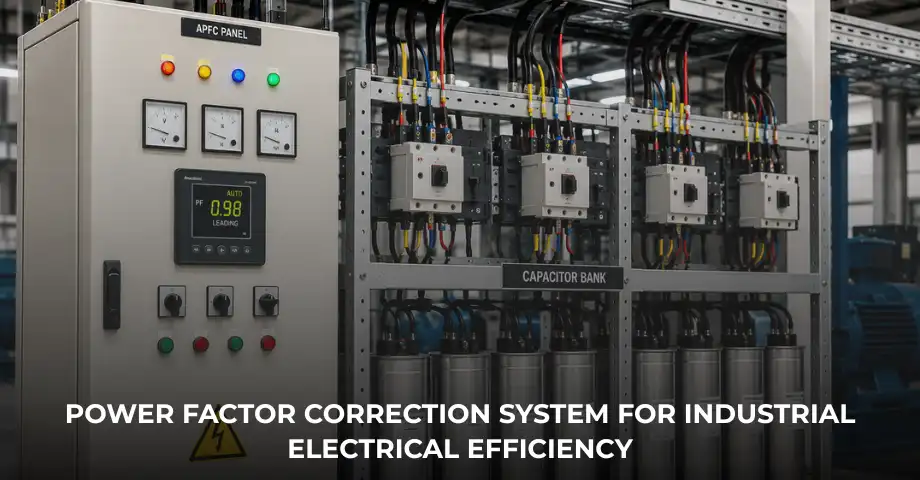
Electrical efficiency is one of the most important factors in modern industrial operations. Manufacturing plants, processing facilities, commercial buildings, and utility substations all rely on stable and efficient power to keep equipment running smoothly. However, many industries unknowingly waste electricity due to poor power factor, resulting in higher electricity bills, increased energy losses, and reduced system performance.
Power Factor Correction is the process of improving the efficiency of an electrical system by reducing reactive power and increasing the usable power available for productive work. By maintaining a high power factor, industries can lower energy costs, improve voltage stability, reduce equipment stress, and comply with utility regulations.
Whether you operate heavy machinery, induction motors, compressors, transformers, or CNC machines, understanding power factor correction is essential for improving electrical efficiency and protecting valuable equipment. In this guide, we’ll explain how power factor correction works, why it is important, the different correction methods available, and how industries can benefit from implementing the right solution.
What is Power Factor?
Power factor is the ratio of real power (kW), which performs useful work, to apparent power (kVA), which is supplied by the electrical system.
The formula is:
Power Factor = kW ÷ kVA
The value of power factor ranges between 0 and 1.
- Power Factor = 1 (Ideal)
- Power Factor = 0.95 (Excellent)
- Power Factor = 0.90 (Good)
- Power Factor below 0.85 generally requires correction.
A higher power factor means that most of the supplied electricity is being converted into useful work. A lower power factor indicates excessive reactive power circulating through the electrical system, causing unnecessary losses.
What is Power Factor Correction?
Power Factor Correction (PFC) is the process of improving the power factor of an electrical system by reducing reactive power. This is typically achieved by installing capacitor banks or Automatic Power Factor Correction (APFC) panels that compensate for the lagging reactive power drawn by inductive loads.
Power factor correction allows industries to:
- Reduce electricity demand charges
- Improve voltage regulation
- Increase system efficiency
- Reduce power losses
- Improve transformer capacity utilization
- Extend equipment life
- Avoid utility penalties for low power factor
In industrial environments where electrical loads vary throughout the day, automatic power factor correction systems provide continuous optimization without manual intervention.
Why is Power Factor Correction Important?
Poor power factor affects almost every component in an electrical distribution system. Although reactive power does not perform useful work, it still occupies capacity in transformers, cables, generators, and switchgear.
Without proper correction, industries may experience:
- Higher electricity bills
- Utility penalty charges
- Transformer overloading
- Voltage drops
- Higher cable losses
- Motor overheating
- Reduced equipment lifespan
- Lower system efficiency
Installing an effective power factor correction system improves overall electrical performance while reducing operating costs.
Facilities experiencing unstable supply voltages should also evaluate the root cause of voltage disturbances. Our guide on Industrial Voltage Fluctuation: Causes and Solutions explains how voltage instability affects industrial equipment and methods to minimise these issues.
What Causes Poor Power Factor?
Most industrial electrical loads are inductive in nature. Inductive equipment requires reactive power to generate magnetic fields, resulting in a lagging power factor.
Common causes include:
1. Induction Motors
Industrial motors are among the largest contributors to poor power factor. Motors operating under light load conditions consume more reactive power relative to useful power.
Motor reliability is equally important for maintaining electrical efficiency. Read our article on Industrial Motor Protection Relays to learn how protection systems help prevent costly motor failures.
2. Power Transformers
Transformers require magnetising current even when lightly loaded. Large transformers operating below their rated capacity can reduce the overall power factor of a facility.
Protecting transformers is just as important as improving efficiency. Learn more about Transformer Protection Systems and how modern protection technologies safeguard critical electrical assets.
3. Welding Machines
Arc welders draw highly fluctuating reactive power, making them a common source of poor power factor in fabrication and manufacturing facilities.
4. Compressors and Pumps
Industrial pumps and air compressors often operate continuously, contributing significantly to reactive power demand.
5. HVAC Systems
Large air conditioning units, chillers, and ventilation systems contain inductive motors that lower overall system power factor.
How Does Power Factor Correction Work?
Power factor correction works by supplying the reactive power required by inductive equipment locally instead of drawing it from the utility supply.
Capacitors generate leading reactive power that offsets the lagging reactive power produced by motors and transformers. As a result:
- Reactive current decreases.
- Total current drawn from the utility is reduced.
- Voltage regulation improves.
- Power losses decrease.
- Available transformer capacity increases.
Modern APFC panels continuously monitor electrical load conditions and automatically switch capacitor banks ON or OFF to maintain the desired power factor, typically between 0.95 and 0.99.
Methods of Power Factor Correction
1. Fixed Capacitor Banks
Fixed capacitor banks provide constant reactive power compensation for electrical loads that remain relatively stable throughout the day. They are commonly used in facilities where equipment operates continuously with minimal load variation.
2. Automatic Power Factor Correction (APFC) Panels
APFC panels are the most widely used solution for modern industrial plants. These systems automatically monitor the power factor and switch capacitor stages as electrical demand changes.
Advantages of APFC panels include:
- Automatic operation
- Accurate power factor control
- Reduced manual intervention
- Improved energy efficiency
- Lower maintenance requirements
3. Synchronous Condensers
Large utility networks and high-capacity industrial plants sometimes use synchronous condensers for dynamic reactive power compensation. Although effective, they require higher investment and maintenance compared to capacitor banks.
4. Active Power Factor Correction Systems
Facilities with harmonic-producing loads, such as variable frequency drives (VFDs), data centres, and automation systems, often use active power factor correction equipment. These advanced systems not only improve power factor but also help reduce harmonics and improve overall power quality.
Benefits of Power Factor Correction
Implementing an effective Power Factor Correction solution provides significant technical and financial advantages for industrial operations.
- Lower electricity bills
- Reduced utility penalty charges
- Improved voltage stability
- Higher transformer utilisation
- Reduced line losses
- Lower operating temperatures in cables and transformers
- Extended equipment lifespan
- Improved overall power quality
- Reduced carbon footprint through better energy efficiency
Industries facing persistent voltage issues can further improve system reliability by combining power factor correction with voltage regulation technologies. Explore our guide on Constant Voltage Transformers for Industrial Applications to understand how stable voltage supports sensitive equipment.
How to Calculate Power Factor Correction Requirements
Before installing a power factor correction system, it is important to determine how much reactive power compensation your facility requires. This depends on your existing power factor, target power factor, and electrical load.
Electrical engineers typically analyse:
- Total connected load (kW)
- Present power factor
- Desired power factor (usually 0.98 or higher)
- Reactive power demand (kVAR)
- Load variation throughout the day
Based on these parameters, the required capacitor bank size is selected to provide the appropriate reactive power compensation. Oversizing or undersizing the capacitor bank can reduce efficiency and may even create operational issues, so proper system design is essential.
Main Components of a Power Factor Correction System
A modern power factor correction system consists of several electrical components working together to maintain an efficient power factor under varying load conditions.
Capacitor Banks
Capacitor banks are the heart of any power factor correction system. They supply leading reactive power to offset the lagging reactive power produced by inductive loads.
APFC Relay
The Automatic Power Factor Controller (APFC) relay continuously monitors the electrical system and switches capacitor stages based on the real-time power factor.
Power Contactors
Heavy-duty capacitor duty contactors safely connect and disconnect capacitor stages while reducing switching transients.
Protection Devices
Every capacitor bank should include suitable protection against overloads, short circuits, and earth faults. Protective relays play a critical role in ensuring the safe operation of power factor correction equipment. Learn more about Overcurrent Protection and its importance in industrial electrical systems.
Current Transformers (CTs)
Current transformers provide accurate current measurements to the APFC relay, allowing it to calculate the system power factor and control capacitor switching.
If you’re selecting CTs for industrial protection or metering, our guides on Current Transformer Accuracy Class and CT vs PT: Current Transformer vs Potential Transformer explain their functions in detail.
Industrial Applications of Power Factor Correction
Power factor correction is widely used across industries where large inductive loads consume significant reactive power.
- Manufacturing Plants
- Steel and Metal Industries
- Cement Plants
- Mining Operations
- Chemical Processing Units
- Paper Mills
- Food Processing Industries
- Water Treatment Plants
- Commercial Buildings
- Hospitals
- Shopping Malls
- Data Centres
- Power Generation Stations
- Electrical Substations
These facilities benefit from reduced energy losses, improved voltage regulation, and lower operating costs through properly designed power factor correction systems.
Common Problems Caused by Poor Power Factor
Ignoring power factor issues can negatively impact the entire electrical distribution network.
Some of the most common problems include:
- Increased electricity demand charges
- Utility penalties for low power factor
- Overloaded transformers
- Higher cable heating
- Reduced system capacity
- Excessive voltage drop
- Poor motor performance
- Reduced equipment life
- Higher maintenance costs
- Unexpected production downtime
Power quality issues often occur alongside voltage instability. If your facility experiences frequent voltage fluctuations, consider implementing both power factor correction and voltage regulation solutions. Read our guide on Voltage Fluctuation Solutions for Industry for practical recommendations.
Best Practices for Maintaining Power Factor Correction Systems
Like any electrical equipment, capacitor banks and APFC panels require regular maintenance to ensure reliable operation.
Recommended maintenance practices include:
- Inspect capacitor banks for bulging or leakage.
- Check capacitor terminals for loose connections.
- Measure capacitor current and voltage.
- Clean panel interiors to prevent dust accumulation.
- Inspect contactors for excessive wear.
- Verify APFC relay settings periodically.
- Test protection devices during scheduled maintenance.
- Monitor harmonic levels in the electrical network.
- Replace damaged capacitors immediately.
- Maintain proper ventilation inside capacitor panels.
Routine inspections improve system reliability and maximise the lifespan of the installed equipment.
How to Choose the Right Power Factor Correction Solution
Every industrial facility has unique electrical characteristics, making it important to select a power factor correction solution based on actual operating conditions rather than using a standard configuration.
Consider the following factors before selecting a system:
- Total electrical connected load
- Existing power factor
- Target power factor
- Nature of the electrical load
- Presence of harmonic-producing equipment
- Transformer capacity
- Future plant expansion plans
- Automatic or manual operation requirements
- Compliance with IEC and IS standards
- Maintenance accessibility
Working with experienced electrical engineers ensures that the selected system provides reliable performance while avoiding overcompensation or resonance issues.
Why Choose Delta Technocrats?
Delta Technocrats is a trusted supplier of industrial electrical solutions, serving customers across West Bengal, Jharkhand, Odisha, and North East India. We provide advanced power quality solutions, transformer protection systems, protection relays, voltage regulation equipment, and electrical automation products designed to improve the safety, efficiency, and reliability of industrial power systems.
Our engineering team helps customers select the right solution based on load analysis, electrical system requirements, and industry standards. From consultation and product selection to installation support and after-sales service, we are committed to delivering dependable solutions that enhance operational efficiency and reduce energy costs.
For facilities using transformers, we also recommend reviewing our guide on Transformer Protection Relays for Industries to ensure complete protection of critical electrical assets.
Conclusion
Power Factor Correction is one of the most effective ways to improve electrical efficiency, reduce operating costs, and increase the reliability of industrial power systems. By minimising reactive power through properly designed capacitor banks or Automatic Power Factor Correction (APFC) panels, industries can optimise transformer capacity, reduce electrical losses, improve voltage stability, and avoid utility penalties.
Whether you operate a manufacturing facility, power plant, commercial building, or industrial substation, investing in the right power factor correction solution provides long-term financial savings while improving the overall performance of your electrical infrastructure. Combined with proper protection systems and preventive maintenance, power factor correction plays a vital role in achieving a safe, efficient, and dependable power distribution network.
Frequently Asked Questions (FAQs)
1. What is power factor correction?
Power factor correction is the process of improving the power factor of an electrical system by reducing reactive power using capacitor banks or APFC panels, resulting in improved energy efficiency and lower electricity costs.
2. Why is power factor important in industries?
A good power factor reduces energy losses, improves voltage regulation, increases transformer capacity, and helps industries avoid utility penalty charges for excessive reactive power consumption.
3. What is an ideal power factor?
An ideal power factor is 1.0, while most industrial facilities aim to maintain a power factor between 0.95 and 0.99 for efficient operation.
4. What equipment causes poor power factor?
Induction motors, transformers, welding machines, compressors, pumps, HVAC systems, and other inductive loads are the primary causes of poor power factor.
5. What is the difference between a capacitor bank and an APFC panel?
A fixed capacitor bank provides constant reactive power compensation, whereas an APFC panel automatically switches capacitor stages based on changing load conditions to maintain the desired power factor.
Need Expert Power Factor Correction Solutions?
If your facility is experiencing low power factor, rising electricity bills, or utility penalties, Delta Technocrats can help. We offer reliable Power Factor Correction solutions, APFC panels, capacitor banks, transformer protection systems, and industrial power quality products tailored to your operational requirements. Contact our team today for expert guidance on improving the efficiency, reliability, and performance of your electrical system.