
Modern industrial facilities rely heavily on electronic equipment such as Variable Frequency Drives (VFDs), Uninterruptible Power Supplies (UPS), PLCs, CNC machines, rectifiers, welding equipment, and other power electronic devices. While these technologies improve productivity, automation, and energy efficiency, they also introduce an often-overlooked power quality problem known as Harmonic Distortion.
Harmonic distortion can reduce the efficiency of electrical systems, overheat transformers and motors, shorten equipment life, increase energy losses, cause capacitor bank failures, and lead to nuisance tripping of protection devices. If left unaddressed, harmonics can significantly affect the reliability and performance of industrial power systems.
Fortunately, advances in power quality engineering have made it possible to identify, monitor, and mitigate harmonic distortion through solutions such as Active Harmonic Filters (AHFs), proper system design, and continuous power quality monitoring.
In this guide, you’ll learn what harmonic distortion is, how harmonics are generated, their common sources, how (THD) is measured, and the international standards used to evaluate power quality in industrial electrical systems.
What Is Harmonic Distortion?
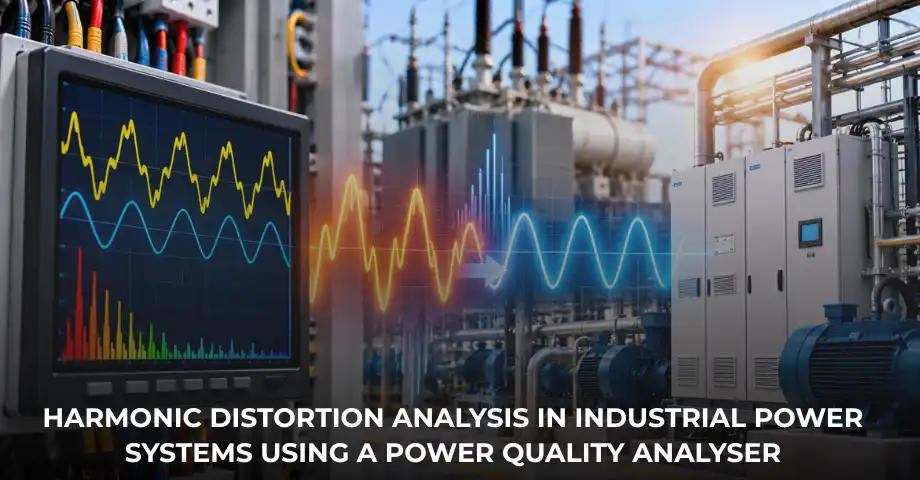
Harmonic Distortion refers to the distortion of the normal sinusoidal voltage or current waveform caused by harmonic frequencies generated by non-linear electrical loads.
In an ideal electrical system, voltage and current waveforms are pure sine waves operating at the system’s fundamental frequency, typically 50 Hz or 60 Hz. However, when non-linear equipment draws current in irregular pulses rather than smooth sinusoidal waves, additional frequency components known as harmonics are introduced into the electrical system.
These harmonics distort the original waveform, resulting in increased electrical losses, equipment overheating, reduced efficiency, and poor overall power quality.
Quick Definition
Harmonic Distortion is the deformation of a normal electrical voltage or current waveform caused by harmonic frequencies generated by non-linear electrical equipment such as VFDs, UPS systems, rectifiers, and electronic power converters.
Managing harmonic distortion is an essential part of modern Power Quality improvement programmes. Technologies such as Active Harmonic Filters are specifically designed to minimise harmonics and improve electrical system performance.
What Are Harmonics?
Harmonics are electrical frequencies that are integer multiples of the fundamental supply frequency.
For example, in a 50 Hz electrical system:
- Fundamental Frequency = 50 Hz
- 2nd Harmonic = 100 Hz
- 3rd Harmonic = 150 Hz
- 5th Harmonic = 250 Hz
- 7th Harmonic = 350 Hz
- 11th Harmonic = 550 Hz
Each harmonic frequency combines with the fundamental waveform, creating waveform distortion.
Although many harmonic orders can exist simultaneously, the 3rd, 5th, 7th, 11th, and 13th harmonics are among the most common in industrial power systems.
The amount of waveform distortion depends on the number of non-linear loads connected to the electrical network and their operating conditions.
How Harmonic Distortion Occurs
Harmonic distortion occurs whenever electrical equipment draws current in a non-linear manner. Instead of consuming current smoothly throughout each AC cycle, non-linear loads draw current in short pulses.
These irregular current pulses generate harmonic frequencies that circulate throughout the electrical distribution system, affecting transformers, motors, cables, switchgear, capacitor banks, and other connected equipment.
The more non-linear equipment installed within a facility, the greater the harmonic distortion present in the electrical network.
Normal Linear Load
- Current waveform follows voltage waveform.
- Minimal waveform distortion.
- Excellent power quality.
Non-Linear Load
- Current waveform becomes distorted.
- Additional harmonic frequencies are generated.
- Total Harmonic Distortion (THD) increases.
Key Point
Harmonics are commonly generated by non-linear electrical loads such as VFDs, UPS systems, rectifiers, and other power electronic equipment within an industrial facility. However, harmonic distortion may also originate from upstream electrical networks and enter the facility through the incoming power supply. The actual harmonic levels depend on the connected loads, network impedance, and overall power system conditions.
Common Sources of Harmonic Distortion
Modern industries use a wide range of non-linear electrical equipment that generates harmonic currents. Understanding these sources helps engineers identify potential power quality issues and select appropriate mitigation solutions.
Variable Frequency Drives (VFDs)
Variable Frequency Drives are among the largest contributors to harmonic distortion in industrial facilities. VFDs convert AC power to DC and then back to variable-frequency AC power using power electronic switching devices.
This conversion process generates significant harmonic currents that affect the electrical distribution system.
Industries using numerous VFD-controlled motors often require harmonic mitigation solutions to maintain acceptable power quality.
Uninterruptible Power Supplies (UPS)
UPS systems contain rectifiers and inverters that operate using high-speed electronic switching. While they provide reliable backup power, they also introduce harmonics into the electrical network.
Large data centres, hospitals, commercial buildings, and IT facilities commonly experience harmonic distortion due to UPS installations.
Rectifiers and Power Converters
Rectifiers used in battery charging systems, electroplating plants, DC motor drives, and industrial process equipment convert AC power into DC power through semiconductor switching devices.
These devices generate significant harmonic currents during normal operation.
Switch Mode Power Supplies (SMPS)
SMPS units are found in computers, PLCs, communication equipment, LED lighting, and industrial automation systems.
Although individual SMPS units generate relatively small harmonics, large numbers of electronic devices can collectively create substantial harmonic distortion.
Arc Furnaces
Electric arc furnaces used in steel manufacturing are among the most severe sources of harmonic distortion because of their rapidly changing electrical characteristics.
These installations require specialised power quality solutions to maintain system stability.
Welding Machines
Industrial welding equipment generates harmonics due to rapid switching and fluctuating electrical loads.
Facilities with multiple welding stations often experience increased Total Harmonic Distortion (THD), particularly during peak production periods.
CNC Machines
Modern CNC machines use servo drives, VFDs, switching power supplies, and sophisticated control electronics, making them another common source of harmonic distortion.
To protect sensitive manufacturing equipment against electrical disturbances, many facilities combine harmonic mitigation with voltage regulation solutions. Learn more in our guide on Voltage Protection for CNC Machines in Industrial Plants.
Understanding Total Harmonic Distortion (THD)
The severity of harmonic distortion is commonly measured using Total Harmonic Distortion (THD).
THD represents the percentage of harmonic content present in relation to the fundamental frequency.
There are two commonly used measurements:
- THDv — Total Harmonic Distortion of Voltage.
- Formula: THDv (%) = [√(V₂² + V₃² + V₄² + … + Vₙ²) / V₁] × 100
- THDi — Total Harmonic Distortion of Current.
- Formula: THDi (%) = [√(I₂² + I₃² + I₄² + … + Iₙ²) / I₁] × 100
Where:
- V₁ and I₁ = RMS values of the fundamental voltage and current
- V₂, V₃ … Vₙ = RMS voltage values of the harmonic components
- I₂, I₃ … Iₙ = RMS current values of the harmonic components
Higher THD values indicate greater waveform distortion and poorer power quality.
For example:
| THD Level | Power Quality Condition |
|---|---|
| Below 5% | Excellent |
| 5–8% | Acceptable for many installations |
| Above 8% | Requires investigation and mitigation |
Regular power quality analysis helps engineers identify excessive THD before it begins affecting equipment performance.
IEEE 519 Standard for Harmonic Control
The most widely recognised international guideline for harmonic control is IEEE Standard 519, which provides recommended limits for harmonic current and voltage distortion in electrical power systems.
The standard aims to:
- Maintain acceptable power quality.
- Protect utility networks.
- Improve equipment reliability.
- Reduce excessive harmonic distortion.
- Support proper system design.
Compliance with IEEE 519 helps industries minimise operational problems while ensuring compatibility with utility power systems.
Modern power quality studies often evaluate THD levels against IEEE 519 recommendations before selecting mitigation equipment such as Active Harmonic Filters or detuned capacitor banks.
Why Harmonic Monitoring Is Becoming Essential
Industrial automation continues to increase the number of non-linear electrical loads connected to modern power systems. As facilities adopt more VFDs, PLCs, robotics, renewable energy systems, and electronic power converters, harmonic distortion becomes increasingly difficult to manage without continuous monitoring.
Many industries now integrate harmonic analysis into broader power quality and substation monitoring programmes using intelligent monitoring platforms and SCADA systems.
This enables maintenance engineers to detect abnormal harmonic levels, evaluate long-term trends, and implement corrective measures before equipment reliability is affected.
Effects of Harmonic Distortion on Industrial Power Systems
Although harmonic distortion is often invisible during normal operation, its effects can significantly reduce the performance, reliability, and lifespan of electrical equipment. As harmonic levels increase, additional losses are generated throughout the electrical system, resulting in overheating, reduced efficiency, and unexpected equipment failures.
The severity of these effects depends on the magnitude of the harmonics, the type of equipment connected, and the overall electrical system design.
Impact on Power Transformers
Transformers are particularly vulnerable to harmonic currents because harmonics increase copper losses, core losses, and stray losses.
Excessive harmonic distortion can lead to:
- Transformer overheating.
- Reduced insulation life.
- Higher operating temperatures.
- Lower transformer efficiency.
- Premature transformer ageing.
Continuous transformer monitoring helps identify overheating caused by harmonic loading before permanent damage occurs. Learn more in our guide on Transformer Condition Monitoring.
Impact on Electric Motors
Harmonics generate additional losses in induction motors, increasing operating temperatures and reducing efficiency.
Common problems include:
- Motor overheating.
- Torque pulsations.
- Mechanical vibration.
- Reduced insulation life.
- Lower operating efficiency.
In facilities with numerous VFD-driven motors, harmonic mitigation plays an important role in improving motor reliability.
Impact on Capacitor Banks and APFC Panels
Capacitor banks are highly sensitive to harmonic distortion. Harmonic currents may resonate with capacitor banks, causing excessive current flow, overheating, dielectric stress, and premature capacitor failure.
This is particularly important for Automatic Power Factor Correction (APFC) Panels, where harmonics can reduce compensation performance and damage switching components.
For facilities experiencing both poor power factor and harmonic distortion, specialised solutions such as detuned APFC panels or Active Harmonic Filters are often recommended. Read our article on APFC Panel Explained for more information.
Impact on Protection Relays
Harmonic distortion can influence the operation of protection relays by introducing waveform distortion that affects current and voltage measurements.
Potential issues include:
- Nuisance tripping.
- Incorrect fault detection.
- Reduced relay accuracy.
- Protection coordination problems.
Modern numerical protection relays incorporate advanced filtering algorithms to minimise the influence of harmonics while maintaining dependable protection.
Impact on Cables and Switchgear
Harmonic currents increase RMS current, resulting in additional heating of cables, busbars, switchgear, and electrical connections.
Over time, this additional thermal stress accelerates insulation ageing and increases maintenance requirements.
Reduced Energy Efficiency
One of the most significant economic impacts of harmonic distortion is increased electrical losses.
Additional harmonic currents increase:
- Copper losses.
- Core losses.
- Heat generation.
- Reactive power demand.
- Operating costs.
Reducing harmonic distortion improves overall energy efficiency while lowering electricity consumption and maintenance expenses.
Methods for Reducing Harmonic Distortion
Several engineering techniques are available to minimise harmonic distortion and improve power quality. The appropriate solution depends on the type of non-linear loads, harmonic levels, and system configuration.
Active Harmonic Filters (AHFs)
Active Harmonic Filters are one of the most effective solutions for modern industrial power systems. They continuously monitor harmonic currents and inject equal but opposite harmonic currents to cancel distortion in real time.
Key advantages include:
- Dynamic harmonic compensation.
- Real-time response.
- Improved power quality.
- Reduced Total Harmonic Distortion.
- Support for changing load conditions.
Learn more in our comprehensive guide on Active Harmonic Filter.
Passive Harmonic Filters
Passive filters use combinations of capacitors, reactors, and resistors to reduce specific harmonic frequencies.
Although cost-effective for certain applications, passive filters are generally less flexible than Active Harmonic Filters because they are designed for fixed harmonic conditions.
Detuned Capacitor Banks
Detuned capacitor banks combine capacitors with series reactors to prevent resonance between capacitor banks and harmonic frequencies.
They are commonly used in systems requiring both power factor correction and harmonic mitigation.
Proper System Design
Careful electrical system design, including correct transformer sizing, cable selection, equipment layout, and load balancing, helps minimise harmonic problems before they develop.
Passive Harmonic Filters vs Active Harmonic Filters
| Feature | Passive Harmonic Filter | Active Harmonic Filter |
|---|---|---|
| Operating Principle | LC Filter Network | Electronic Current Injection |
| Response | Fixed | Dynamic |
| Load Adaptability | Limited | Excellent |
| Multiple Harmonic Orders | Limited | Yes |
| Suitable for Variable Loads | No | Yes |
| Maintenance | Low | Low |
Modern industries with rapidly changing electrical loads increasingly prefer Active Harmonic Filters because they automatically adapt to changing harmonic conditions.
Integration with APFC Panels and SCADA
Modern power quality solutions often combine Active Harmonic Filters, APFC Panels, and SCADA systems to provide comprehensive electrical system optimisation.
While APFC panels maintain the desired power factor, Active Harmonic Filters eliminate waveform distortion. SCADA systems provide continuous monitoring of:
- Total Harmonic Distortion (THD).
- Power Factor.
- Voltage.
- Current.
- Energy Consumption.
- Equipment Alarms.
This integrated approach improves electrical reliability while enabling predictive maintenance and long-term power quality analysis.
To explore these technologies further, read our guides on APFC Panel Explained, Power Factor Correction, and SCADA for Electrical Substations.
Why Choose Delta Technocrats?
Delta Technocrats provides advanced Power Quality Solutions that help industries improve electrical efficiency, reduce equipment failures, and maintain compliance with international power quality standards.
Our expertise includes:
- Active Harmonic Filters (AHFs).
- Automatic Power Factor Correction (APFC) Panels.
- Power Quality Analysis.
- Transformer Condition Monitoring.
- Substation Automation.
- SCADA Integration.
- Electrical Protection Systems.
- Testing & Commissioning Services.
From power quality audits and harmonic analysis to equipment selection, installation, commissioning, and after-sales support, our engineering team delivers customised solutions for industrial and utility applications across Eastern India.
Frequently Asked Questions (FAQs)
1. What is Harmonic Distortion?
Harmonic Distortion is the deformation of normal voltage or current waveforms caused by harmonic frequencies generated by non-linear electrical loads.
2. What causes harmonics in industrial power systems?
Common sources include Variable Frequency Drives (VFDs), UPS systems, rectifiers, switching power supplies, welding machines, CNC machines, and arc furnaces.
3. What is Total Harmonic Distortion (THD)?
THD is a measurement that indicates the percentage of harmonic content present in a voltage or current waveform compared to the fundamental frequency.
4. Why is harmonic distortion harmful?
Excessive harmonics increase equipment heating, reduce energy efficiency, shorten equipment life, interfere with protection systems, and increase operating costs.
5. How can harmonic distortion be reduced?
Common solutions include Active Harmonic Filters, Passive Harmonic Filters, detuned capacitor banks, proper electrical system design, and continuous power quality monitoring.
6. What is the difference between Passive and Active Harmonic Filters?
Passive filters target specific harmonic frequencies using passive components, while Active Harmonic Filters dynamically compensate multiple harmonic orders in real time.
7. Can harmonic distortion affect APFC Panels?
Yes. Excessive harmonics may damage capacitor banks, reduce power factor correction efficiency, and create resonance problems if appropriate mitigation measures are not implemented.
8. Which standard governs harmonic limits?
IEEE 519 is the internationally recognised standard providing recommended limits for harmonic current and voltage distortion in electrical power systems.
Conclusion
Harmonic Distortion has become one of the most important power quality challenges in modern industrial electrical systems due to the widespread use of non-linear electronic equipment. If left unmanaged, harmonics can reduce equipment efficiency, increase maintenance costs, shorten equipment life, and compromise the reliability of critical electrical infrastructure.
By understanding the sources of harmonics, monitoring Total Harmonic Distortion (THD), and implementing effective mitigation techniques such as Active Harmonic Filters and properly designed APFC systems, industries can significantly improve power quality, reduce energy losses, and protect valuable electrical assets.
As industrial automation continues to expand, proactive harmonic management will remain essential for achieving reliable, efficient, and sustainable electrical power systems.
To continue exploring power quality and electrical system optimisation, you may also find these guides helpful:
- Active Harmonic Filter
- APFC Panel Explained
- Power Factor Correction
- SCADA for Electrical Substations
- Substation Automation
- Transformer Condition Monitoring
- Transformer Protection System
- Online DGA Monitoring System
Improve Power Quality with Delta Technocrats
Delta Technocrats offers comprehensive power quality solutions, including Active Harmonic Filters, APFC Panels, harmonic analysis, SCADA integration, transformer condition monitoring, and electrical system audits. Our experienced engineers help industries reduce harmonic distortion, improve energy efficiency, and enhance the reliability of critical electrical infrastructure through customised, standards-compliant solutions.