
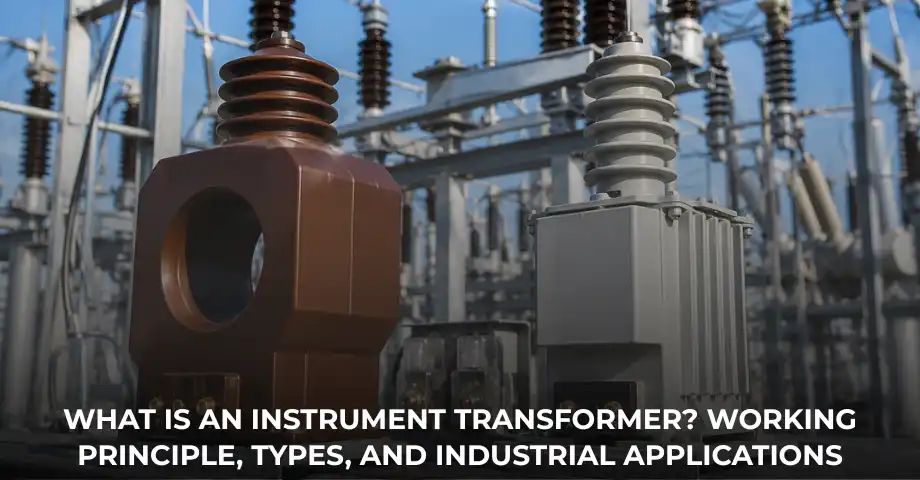
In modern electrical power systems, measuring high voltage and current directly is not only difficult but extremely dangerous. Industrial substations, transmission networks, manufacturing plants, and utility infrastructures operate with electrical values far beyond the safe operating limits of ordinary measuring instruments and relay systems.
An instrument transformer is a specialized electrical transformer used to safely reduce high voltage or current into standardized low values for measurement, monitoring, and protection purposes. These transformers play a critical role in substations, industrial power systems, relay protection panels, switchgear installations, and electrical metering systems.
Without instrument transformers, engineers would not be able to safely monitor electrical parameters, operate protective relays, analyze power quality, or maintain reliable protection coordination in high-voltage systems.
Whether it is an industrial manufacturing facility, a utility substation, or a power distribution network, instrument transformers form the backbone of safe electrical measurement and power system protection.
As industries increasingly adopt automated monitoring systems and advanced relay protection technologies, the importance of accurate and reliable instrument transformers continues to grow across modern electrical infrastructures.
Delta Technocrats provides industrial electrical solutions designed to improve power system reliability, electrical protection, voltage stability, and industrial operational safety across various industrial sectors.
The Growing Need for Instrument Transformers in Modern Power Systems
Modern industries depend heavily on uninterrupted and stable electrical power. However, industrial power systems often operate at thousands of volts and carry extremely high current loads. Directly connecting measuring instruments or protective relays to such systems would expose equipment and operators to severe electrical risks.
This is where instrument transformers become essential.
These transformers allow electrical engineers to safely monitor current and voltage levels without exposing meters, monitoring systems, or relay panels to dangerous electrical conditions. By stepping down electrical values into standardized ranges, instrument transformers make high-voltage power systems manageable, measurable, and safer to operate.
In industrial substations, electrical distribution systems, and switchgear installations, instrument transformers help maintain:
- Accurate electrical measurement
- Relay protection coordination
- Fault detection capabilities
- Electrical isolation
- Power system monitoring
- Operational safety
- Equipment protection
Today, industries increasingly integrate instrument transformers with advanced protection systems such as transformer protection relays and intelligent monitoring technologies to improve system reliability and reduce electrical failures.
What Is an Instrument Transformer?
An instrument transformer is a transformer specifically designed for measurement and protection applications in electrical power systems. Its primary purpose is to convert high voltage or current levels into lower standardized values that can be safely handled by measuring instruments, energy meters, and protective relays.
Instrument transformers are essential components in substations, switchyards, industrial plants, and utility distribution systems because they provide safe electrical isolation while maintaining accurate proportional measurements.
In high-voltage systems, directly measuring electrical parameters is impractical due to:
- Safety hazards
- Equipment limitations
- Insulation requirements
- High fault currents
- Risk of relay or meter damage
Instrument transformers solve these challenges by reducing electrical quantities into safe operating levels while preserving measurement accuracy.
These transformers are widely used with:
- Protective relays
- Energy meters
- Monitoring systems
- Power analyzers
- Switchgear panels
- Relay protection systems
- Substation automation systems
In modern industrial applications, instrument transformers are not just measuring devices — they are critical components in power system reliability and fault protection strategies.
Instrument Transformer Working Principle
The working principle of an instrument transformer is based on electromagnetic induction. These transformers operate similarly to conventional transformers but are specifically designed for precision measurement and electrical protection applications rather than power transfer.
An instrument transformer contains primary and secondary windings. The primary side is connected to the high-voltage or high-current power system, while the secondary side is connected to measuring instruments or relay systems.
When current or voltage flows through the primary winding, a magnetic field is generated. This magnetic field induces a proportional current or voltage in the secondary winding. The resulting output is a scaled-down and standardized representation of the actual electrical quantity present in the system.
This allows electrical engineers and protection systems to safely monitor high-voltage electrical networks without directly interacting with dangerous power levels.
For example:
- A current transformer may reduce thousands of amperes into a standard 5A or 1A secondary output.
- A potential transformer may reduce high transmission voltages into standard measurable voltage levels such as 110V.
These standardized outputs are then used for:
- Electrical metering
- Relay protection
- Fault detection
- Power quality analysis
- Energy monitoring
- System automation
Accurate measurement is extremely important in industrial facilities where unstable electrical conditions can affect sensitive machinery and production systems. Industries facing voltage instability often combine monitoring systems with constant voltage transformer solutions to improve power quality and equipment safety.
Types of Instrument Transformers
Instrument transformers are broadly classified into two main categories:
- Current Transformers (CTs)
- Potential Transformers (PTs)
Both types play essential roles in electrical measurement and protection systems, but they are designed for different functions.
Current Transformer (CT)
A current transformer is used to reduce high current levels into smaller standardized currents suitable for measuring instruments and protective relays.
In industrial substations and power distribution systems, line currents may reach extremely high values. Direct measurement under such conditions would damage instruments and create major safety risks.
A current transformer safely steps down the current while maintaining proportional accuracy.
CTs are widely used in:
- Overcurrent protection systems
- Relay coordination systems
- Load monitoring applications
- Industrial metering systems
- Fault detection systems
Incorrect CT sizing or poor CT selection can create serious operational issues. In industrial plants, inaccurate CT performance may cause relay maloperation during fault conditions, leading to equipment damage or unnecessary system shutdowns.
Potential Transformer (PT)
A potential transformer, also known as a voltage transformer, is used to reduce high voltage levels into safe measurable voltages for monitoring and protection purposes.
PTs are commonly used in substations, switchgear systems, transmission networks, and industrial electrical installations where accurate voltage monitoring is necessary.
Typical PT applications include:
- Voltage monitoring
- Power quality analysis
- Energy metering
- Relay protection systems
- Substation automation
Both CTs and PTs work together in electrical power systems to provide safe and accurate measurement data for protection and monitoring systems.
Industries seeking reliable instrument transformer solutions often integrate CTs and PTs with advanced monitoring infrastructure for improved electrical reliability and protection coordination.
Difference Between CT and PT
| Feature | Current Transformer (CT) | Potential Transformer (PT) |
|---|---|---|
| Main Function | Measures current | Measures voltage |
| Connection Type | Connected in series | Connected in parallel |
| Typical Secondary Output | 1A or 5A | 110V |
| Main Application | Current monitoring and protection | Voltage monitoring and protection |
| Used In | Relay systems, metering, fault detection | Voltage monitoring, metering, automation |
| Primary Purpose | Reduce high current safely | Reduce high voltage safely |
Role of Instrument Transformers in Substations
Substations are among the most critical parts of electrical transmission and distribution infrastructure. These facilities handle extremely high voltage and current levels that require continuous monitoring and protection.
Instrument transformers play a central role in ensuring safe and reliable substation operations.
In substations, instrument transformers are used for:
- Relay protection systems
- Power monitoring
- Load management
- Fault detection
- Energy metering
- Substation automation
- Electrical isolation
Protective relays rely heavily on accurate voltage and current measurements from CTs and PTs. If measurement signals become inaccurate, relay systems may fail to detect faults properly or may trigger false operations.
In high-voltage substations, poor measurement accuracy can affect:
- Fault isolation
- Equipment protection
- Transformer safety
- Power continuity
- Industrial reliability
This is why industries increasingly adopt advanced protection technologies such as numerical protection relays alongside accurate instrument transformer systems.
Modern substations also require stable electrical conditions for sensitive automation systems and relay panels. Many facilities therefore integrate constant voltage transformers and voltage regulation systems to improve operational stability.
Industrial Applications of Instrument Transformers
Instrument transformers are used extensively across industrial electrical infrastructures where accurate monitoring, protection, and measurement are essential.
Industries operating large electrical loads and automated machinery depend heavily on reliable electrical monitoring systems. Instrument transformers help industries monitor electrical conditions continuously while maintaining safe isolation between high-voltage systems and sensitive instruments.
Common industrial applications include:
- Industrial substations
- Manufacturing plants
- Power generation facilities
- Transmission systems
- Switchgear installations
- Motor control centers
- Utility distribution systems
- Industrial automation systems
In manufacturing industries, unstable electrical conditions can lead to:
- Motor failures
- Relay tripping
- Equipment damage
- Production downtime
- Power quality issues
To prevent these issues, industries use instrument transformers together with protection systems such as:
Industries experiencing severe voltage fluctuations also implement specialized industrial voltage fluctuation solutions and monitoring systems to maintain electrical reliability and reduce operational disruptions.
In CNC manufacturing environments, stable voltage and accurate monitoring become even more important because sensitive machines can malfunction during electrical disturbances. This is why many facilities adopt CNC machine voltage protection systems alongside industrial monitoring infrastructure.
Benefits of Instrument Transformers
Instrument transformers provide several important operational and safety benefits in modern power systems.
Improved Electrical Safety
These transformers isolate measuring devices and relay systems from dangerous high-voltage circuits, reducing risks for operators and equipment.
Accurate Measurement
Instrument transformers provide reliable voltage and current measurements required for monitoring, energy metering, and fault analysis.
Reliable Relay Protection
Protective relays require accurate electrical inputs to identify abnormal conditions. Instrument transformers ensure relays receive precise and stable signals.
Better System Reliability
Continuous monitoring and proper relay coordination help industries reduce downtime and improve power system reliability.
Support for Modern Automation
Modern industrial power systems increasingly depend on automation and intelligent monitoring. Instrument transformers provide the measurement foundation necessary for these systems to operate effectively.
The Future Importance of Instrument Transformers
As industries modernize their electrical infrastructures, the role of instrument transformers continues to expand. Smart substations, automated protection systems, intelligent monitoring platforms, and digital relay technologies all depend on accurate electrical measurement.
Future industrial power systems will require even greater levels of:
- Protection accuracy
- Power quality monitoring
- System automation
- Fault analysis
- Predictive maintenance
- Energy efficiency
Instrument transformers will remain critical components in achieving these objectives because they provide the reliable measurement data required for modern protection and automation systems.
Conclusion
Instrument transformers are among the most important components in modern electrical power systems. By safely reducing high voltage and current into measurable standardized values, these transformers make electrical monitoring, protection, and automation possible across industrial and utility infrastructures.
From substations and manufacturing plants to relay panels and power distribution systems, instrument transformers support safe operation, accurate measurement, and reliable protection coordination.
As industrial facilities continue adopting advanced protection systems and automated monitoring technologies, the importance of reliable instrument transformer solutions will continue to grow.
With expertise in industrial electrical systems, protection relays, voltage stabilization, and power quality management, Delta Technocrats helps industries build safer, more reliable, and more efficient electrical infrastructures for modern industrial operations.